
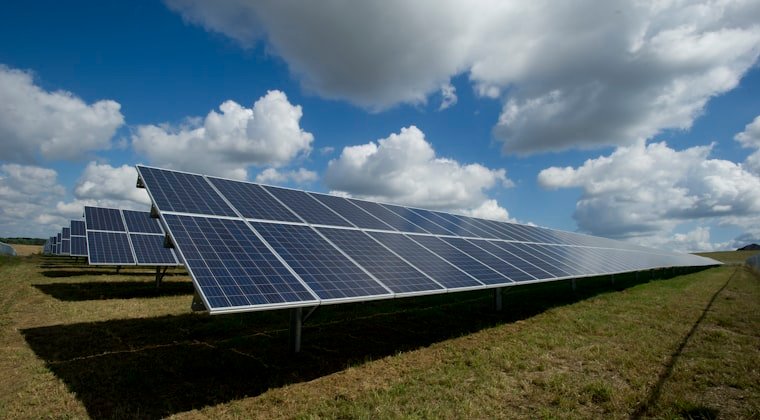
Solar Payback Period in India: City-by-City Real Calculation
The payback period for rooftop solar is the number of years it takes for your electricity bill savings to recover your initial investment. In India in 2026, payback periods for residential solar after the PM Surya Ghar subsidy typically range from 3 to 6 years depending on where you live, how much electricity you consume, and the tariff you pay.
This guide breaks down the real numbers, city by city, and explains what drives the variation.
What determines your solar payback period?
Three factors drive your payback period more than anything else.
Your electricity tariff. The more you pay per unit of electricity, the more each unit your solar system generates is worth to you. A household paying Rs 8 per unit saves twice as much per unit as one paying Rs 4 per unit from the same solar system.
How much electricity you consume. Solar savings only occur when your system generates electricity that you would otherwise buy from the grid. A household consuming 600 units per month benefits more from a 3 kW system than one consuming 150 units, because the higher-consumption household uses more of the solar output directly.
Your local sunlight. A 3 kW system in Jaipur generates more units per year than the same system in Mumbai because Rajasthan receives more annual sunshine hours. More units generated means faster payback.
Payback period by city: indicative calculations for a 3 kW system
These calculations assume the PM Surya Ghar central subsidy of Rs 78,000 is applied, the household consumes 350 to 450 units per month, and system cost after subsidy is Rs 85,000 to Rs 1 lakh.
| City | Monthly generation (approx) | Monthly savings (approx) | Payback period |
|---|---|---|---|
| Jaipur | 420 to 480 units | Rs 3,000 to Rs 4,000 | 2 to 3 years |
| Jodhpur | 440 to 500 units | Rs 3,200 to Rs 4,200 | 2 to 3 years |
| Ahmedabad | 400 to 460 units | Rs 2,800 to Rs 3,800 | 3 to 4 years |
| Delhi | 360 to 430 units | Rs 2,500 to Rs 3,500 | 3 to 4 years |
| Pune | 360 to 420 units | Rs 2,500 to Rs 3,200 | 3 to 5 years |
| Hyderabad | 350 to 410 units | Rs 2,400 to Rs 3,200 | 3 to 5 years |
| Bengaluru | 330 to 390 units | Rs 2,000 to Rs 3,000 | 4 to 5 years |
| Chennai | 330 to 380 units | Rs 1,800 to Rs 2,800 | 4 to 6 years |
| Mumbai | 300 to 360 units | Rs 1,800 to Rs 2,600 | 4 to 6 years |
| Kolkata | 280 to 340 units | Rs 1,500 to Rs 2,200 | 5 to 7 years |
Note: These are indicative ranges. Your actual payback depends on your specific tariff slab, system performance, shading on your roof, and whether you have additional state subsidies.
Why tariff matters more than sunlight in some cities
Chennai and Mumbai receive lower solar irradiance than Jaipur, but their electricity tariffs for higher consumption households are significant. This partially compensates for lower generation in terms of payback period.
Conversely, a city with excellent sunlight but very low domestic tariffs (like some areas with heavy state subsidies on electricity) may show longer payback periods despite generating more units.
The calculation: annual savings equals annual units generated multiplied by the tariff rate you pay per unit. The higher either factor, the faster your payback.
How the subsidy changes the payback calculation
Without the PM Surya Ghar subsidy, a 3 kW system costing Rs 1.8 lakh at Rs 3,000 monthly savings has a payback of 60 months, or 5 years.
With the Rs 78,000 subsidy reducing net cost to Rs 1.02 lakh at the same Rs 3,000 monthly savings, payback drops to 34 months, or under 3 years.
The subsidy does not change how much electricity your panels generate. It simply reduces the investment you need to recover, which directly accelerates payback.
What happens after payback?
After your payback period, every rupee of electricity your solar system generates is effectively free. A typical quality solar system in India continues performing well for 25 years with manageable maintenance costs.
If your payback is 4 years, you have 21 years of free electricity generation after that point. At Rs 2,500 per month in savings, that is Rs 6.3 lakh in total savings over the system’s life from Rs 1 lakh of initial net investment. The long-term return on rooftop solar is among the strongest available to Indian homeowners.
Factors that can lengthen your payback period
Partial shading on your roof. Trees, water tanks, or neighbouring buildings that cast shade on panels reduce output. Even partial shading can reduce system generation by 15 to 30 percent if panels are in series. A good installer will assess shading before sizing.
Oversizing the system. Installing a 5 kW system when your consumption is 200 units per month means a large portion of your generation goes to export. If your DISCOM’s export compensation rate is significantly lower than the retail tariff, oversizing extends payback.
Incorrect tilt or orientation. South-facing panels at the optimal tilt angle for your latitude generate the most energy. East or west-facing installations generate 10 to 20 percent less. North-facing is not recommended.
Summing up
For most Indian homeowners, rooftop solar after the PM Surya Ghar subsidy pays back in 3 to 5 years. After that, the system generates free electricity for the remaining 20 or more years of its life. The best payback periods are in high-irradiance states like Rajasthan and Gujarat. The weakest cases are households with very low consumption or in states with heavily subsidised low electricity tariffs.
Free. Koi signup nahi. Real numbers.