
Rooftop Solar in Bareilly 2026: MVVNL Guide, Cost & Savings
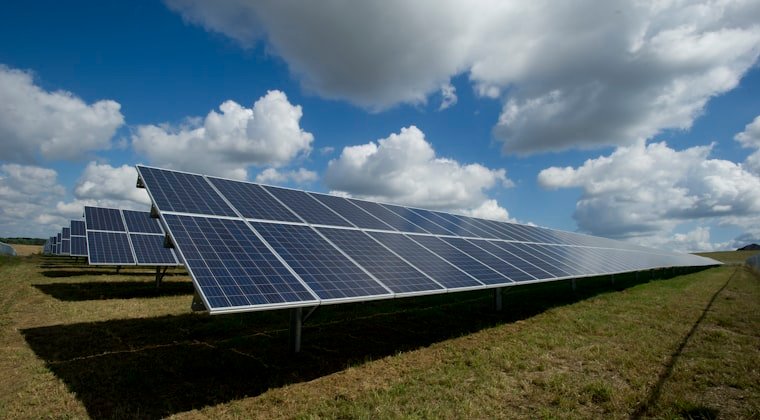
Bareilly added 2,320 new rooftop solar systems in March 2026, placing it firmly among UP’s top solar districts. The city’s solar growth reflects two strong motivations: electricity bills from MVVNL have risen substantially over the past 3 years, and power cut frequency in many of Bareilly’s residential areas has made reliable electricity a genuine pain point.
This guide covers everything a Bareilly homeowner needs to go solar: your DISCOM is MVVNL, here is the exact application process, here is what a 3 kW system costs after UP’s Rs 1,08,000 subsidy, and here is the power cut situation, whether you need a hybrid system or whether standard grid-tied solar is the right choice for your area.
Your DISCOM Is MVVNL: Coverage and What to Expect
MVVNL, Madhyanchal Vidyut Vitaran Nigam Limited, covers central UP including Bareilly, Shahjahanpur, Sitapur, Lakhimpur Kheri, Hardoi, Pilibhit, and surrounding districts. Lucknow district outside the LESA service area also falls under MVVNL.
MVVNL serves a large geographic area with a mix of urban and rural consumers. Processing times for solar applications in Bareilly city are typically 25-40 days for feasibility approval. Rural MVVNL applicants outside Bareilly city should budget 35-50 days. Net meter installation after commissioning takes 15-25 days.
Total timeline for Bareilly city homeowners: approximately 11-15 weeks. Your UPNEDA-registered vendor will handle coordination with MVVNL throughout, reducing the administrative burden on you.
What Rooftop Solar Costs in Bareilly
| System Size | Before Subsidy | UP Subsidy (Max) | Your Net Cost |
|---|---|---|---|
| 2 kW | Rs 1,30,000-1,55,000 | Rs 90,000 | Rs 40,000-65,000 |
| 3 kW | Rs 1,80,000-2,05,000 | Rs 1,08,000 | Rs 72,000-97,000 |
| 5 kW | Rs 2,80,000-3,15,000 | Rs 1,08,000 | Rs 1,72,000-2,07,000 |
Bareilly costs are slightly lower than Lucknow and Kanpur for comparable systems, reflecting lower MVVNL connection charges and a growing local vendor ecosystem. The subsidy structure is identical to all UP cities.
MVVNL Application Process for Bareilly
Step 1: Register at pmsuryaghar.gov.in selecting Uttar Pradesh as state and MVVNL as DISCOM. Find your consumer number on the top section of your MVVNL electricity bill.
Step 2: Submit the application form with system size and bank details.
Step 3: MVVNL feasibility review: 25-40 days for Bareilly city applications.
Step 4: Select UPNEDA-registered vendor at upnedasolarrooftopportal.com under Bareilly district.
| Step 5 | Installation: 2-3 days for standard 3 kW system. |
| Step 6 | Vendor submits commissioning report to portal. |
| Step 7 | MVVNL inspection and net meter installation: 15-25 days after commissioning. |
| Step 8 | Subsidy disbursement: Rs 1,08,000 within 30 days of confirmation. |
The Power Cut Question in Bareilly: Grid-Tied or Hybrid?
Bareilly has a more variable grid reliability record than Lucknow or Meerut. Some residential areas, particularly older parts of the city and neighbourhoods at the end of long feeders, experience power cuts of 3-6 hours daily during summer peak load.
If you are in an area with significant power cuts, the standard grid-tied solar system will shut down during outages. This is not a system failure, it is a mandatory safety feature. During a power cut, your panels generate electricity but your inverter disconnects to prevent back-feeding live current to grid wires.
For Bareilly homeowners in stable-grid areas (Civil Lines, Rajendra Nagar, Subhash Nagar): Standard grid-tied solar is appropriate. Your existing inverter-battery backup handles occasional cuts adequately.
For Bareilly homeowners in weaker-grid areas (older city, semi-urban outskirts, areas with 4+ hour daily cuts): Evaluate a hybrid system with 5-7.5 kWh of battery storage. The additional cost (Rs 80,000-1,20,000 more than a standard system) provides backup during outages. See our full hybrid solar guide for detailed hybrid vs grid-tied comparison.
Savings for a Bareilly Household
Scenario:3BHK in Civil Lines, Bareilly. Monthly MVVNL bill Rs 3,100 (approximately 380 units). 3 kW system at net cost Rs 87,000.
| Monthly saving | Rs 2,500-2,800 at MVVNL blended residential tariff |
| Annual saving | Rs 30,000-33,600 |
| Payback | approximately 2.8-3.1 years |
Bareilly-Specific Considerations
Hybrid inverter preference: Given grid variability in some areas, Bareilly has seen above-average uptake of hybrid inverter systems: even in cases where homeowners add the battery later. Installing a hybrid inverter now and adding a battery in year 2-3 is a strategy several Bareilly homeowners have adopted: the inverter cost premium over a standard unit is approximately Rs 20,000-25,000, while full hybrid-ready capability is then available whenever you add storage.
Agricultural grid impact: Bareilly district’s agricultural areas create summer grid load spikes during cropping season when pump sets operate heavily. This is a factor primarily for MVVNL rural applicants rather than Bareilly city residential consumers.