
5kW Solar System in UP 2026: Cost, Savings and Who Should Install
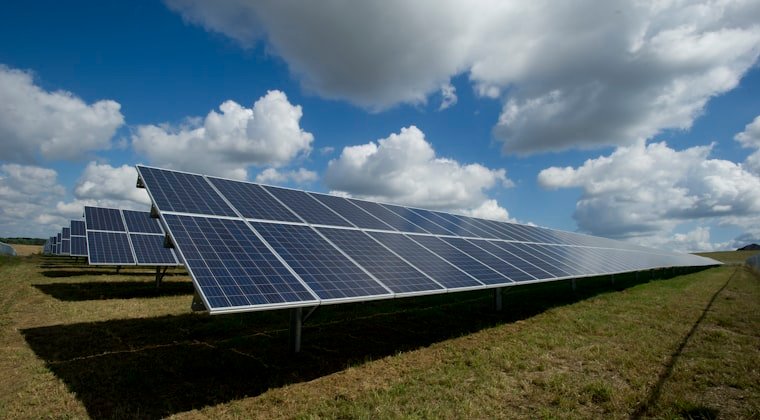
The 3 kW system is the sweet spot for most UP households. But a growing number of homeowners, larger families, households with multiple ACs, home offices with significant equipment load, or small businesses operating from home, need more. The 5 kW system is the natural next step, generating 560-650 units per month in most UP cities.
There is an important financial nuance with 5 kW in UP that many homeowners miss: the government subsidy does not increase beyond 3 kW. The central PM Surya Ghar subsidy is capped at Rs 78,000 for 3 kW and above. The UP state subsidy is similarly fixed at Rs 30,000. So the total subsidy for a 5 kW system is the same Rs 1,08,000 you would receive for a 3 kW system, the extra 2 kW of capacity comes entirely at your cost.
This guide answers the critical question: for which UP households does the 5 kW system make financial sense despite the lower subsidy-to-cost ratio?
5kW vs 3kW: The Subsidy-to-Cost Reality
| Parameter | 3kW System | 5kW System |
|---|---|---|
| Pre-subsidy cost (Lucknow avg) | Rs 1,92,000 | Rs 3,05,000 |
| Total UP subsidy | Rs 1,08,000 | Rs 1,08,000 |
| Your post-subsidy cost | Rs 84,000 | Rs 1,97,000 |
| Monthly generation | 380-400 units | 600-650 units |
| Monthly saving (at Rs 7/unit) | Rs 2,660-2,800 | Rs 4,200-4,550 |
| Annual saving | Rs 31,900-33,600 | Rs 50,400-54,600 |
| Payback period | 2.5-2.7 years | 3.6-3.9 years |
The 5 kW system has a longer payback period because the additional 2 kW of capacity receives no subsidy. However, if your consumption justifies 5 kW, the annual saving is proportionally higher and the long-term return is still very strong.
Who Should Install a 5kW System in UP?
A 5 kW system makes sense if you meet one or more of these criteria:
Your monthly electricity bill is above Rs 4,500 consistently. This generally means monthly consumption of 550+ units. A 3 kW system generating 380-400 units per month will not eliminate a 550-unit monthly bill: you will still pay for the uncovered 150-200 units. A 5 kW system covers your consumption more completely and maximises the financial return.
You run 2 or more air conditioners simultaneously. A single 1.5-ton split AC draws approximately 1,500W when compressing. Two running simultaneously pull 3,000W: which already exceeds your solar generation from a 3 kW system at that moment. A 5 kW system provides meaningful daytime coverage even with heavy AC usage.
You have a home office with significant equipment load. Computers, servers, printers, and multiple monitors in a home business environment easily add 2,000-3,000W of daytime load. A 5 kW system covers this while also charging the building’s general consumption.
You are planning an EV charger. Home EV charging typically draws 3.3-7.4 kW. If you plan to charge an EV during daytime hours using solar, a 5 kW system integrated with an EV charger creates genuine synergy: your panels power your car’s morning commute effectively for free.
You have sufficient roof space (300-350 sq ft shadow-free). A 5 kW system requires approximately 12-14 panels of 380-420W each. This requires around 300-350 sq ft of unobstructed rooftop. If your roof has adequate space, utilising it fully maximises return on your existing rooftop real estate.
City-Wise 5kW Solar Cost in UP After Rs 1,08,000 Subsidy
| City | Pre-Subsidy Cost | Post-Subsidy Cost | Monthly Generation | Annual Saving |
|---|---|---|---|---|
| Lucknow | Rs 2,80,000-3,20,000 | Rs 1,72,000-2,12,000 | 590-640 units | Rs 49,600-53,800 |
| Kanpur | Rs 2,90,000-3,30,000 | Rs 1,82,000-2,22,000 | 580-625 units | Rs 48,700-52,500 |
| Varanasi | Rs 2,88,000-3,25,000 | Rs 1,80,000-2,17,000 | 600-650 units | Rs 50,400-54,600 |
| Agra | Rs 2,85,000-3,20,000 | Rs 1,77,000-2,12,000 | 615-660 units | Rs 51,700-55,400 |
| Meerut | Rs 2,85,000-3,25,000 | Rs 1,77,000-2,17,000 | 590-635 units | Rs 49,600-53,300 |
| Ghaziabad | Rs 3,00,000-3,45,000 | Rs 1,92,000-2,37,000 | 590-635 units | Rs 49,600-53,300 |
| Bareilly | Rs 2,80,000-3,15,000 | Rs 1,72,000-2,07,000 | 575-620 units | Rs 48,300-52,100 |
When 5kW Delivers Better ROI Than 3kW: The Threshold Analysis
The key question is whether your actual monthly electricity consumption exceeds what a 3 kW system can generate. Here is the simple test:
Calculate your monthly average consumption (from last 6 electricity bills, divide total units by 6).
- If consumption is below 350 units/month → 3 kW system is optimal
- If consumption is 350-500 units/month → 3 kW system covers most of your bill; 5 kW adds returns but with longer payback
- If consumption is above 500 units/month → 5 kW system delivers meaningfully better annual savings and comparable payback period
- If consumption is above 700 units/month → Consider whether 7.5-10 kW is appropriate (requires separate DISCOM assessment for larger systems)
Financing a 5kW System in UP
With post-subsidy costs of Rs 1,72,000-2,37,000, the 5 kW system typically requires financing for most middle-class households.
SBI Solar Loan at 7.5%, 5-year tenure: EMI of approximately Rs 3,440-4,740 per month for post-subsidy loan amount.
EMI vs savings comparison: If your monthly saving from a 5 kW system is Rs 4,200-4,550, and your EMI is Rs 3,440-4,000, you are still net positive from month one even while repaying the loan. After 5 years, the loan is repaid and you save Rs 4,200+ per month for 20 more years.
For consumers whose post-subsidy cost is partially reduced by the Rs 1,08,000 subsidy, you effectively finance only Rs 64,000-1,29,000 at current market costs in most UP cities (Kanpur, Varanasi, Meerut etc.): making the EMI even more manageable.
Technical Requirements for a 5kW System in UP
| Roof space | 300-350 sq ft of shadow-free space at minimum. Partial shading from a water tank, staircase shelter, or adjacent building significantly reduces output from shaded strings. |
| Connection load sanction | Your DISCOM connection must have a sanctioned load of at least 5 kW (or 5 kVA). If your current sanctioned load is 3 kW, you may need to apply for a load enhancement before installing a 5 kW system. |
| Phase requirement | 5 kW systems typically use single-phase inverters (suitable for most residential connections), but some DISCOM regulations require three-phase connections for systems above a certain size. Confirm with your DISCOM before ordering equipment. |
| Inverter options for 5kW | At 5 kW capacity, you can use a single 5 kW single-phase inverter or, for better performance management, two parallel 2.5 kW units. Reputable brands at this capacity include Havells, Solis, Delta, Fronius, and SMA. |
Frequently Asked Questions
Apply through pmsuryaghar.gov.in and verify your vendor at upnedasolarrooftopportal.com before signing any agreement.