
Monocrystalline vs Bifacial Solar Panels for UP Rooftops: Which Earns More
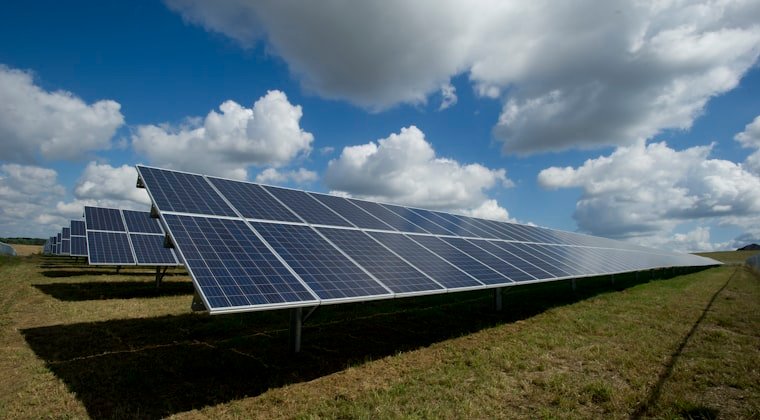
When you get a solar quote in UP today, your vendor will typically offer either standard monocrystalline panels or bifacial monocrystalline panels at a premium. The price difference is real. Bifacial panels typically cost Rs 3,000-8,000 more for a 3 kW system, and whether this premium is worth paying depends on your specific UP rooftop conditions.
This guide explains what bifacial panels actually are, under what conditions they deliver meaningful extra generation in UP, and which panel technology makes the most financial sense for the different rooftop types common across the state.
Panel Technology Hierarchy in 2026
Understanding where each technology sits helps you evaluate vendor recommendations accurately.
| Polycrystalline (P-type) | Older technology, easily identified by a blue, textured appearance. Still available from budget manufacturers. Lower efficiency (15-17%), higher temperature coefficient (-0.40% to -0.45%/°C). Not recommended for new installations in UP’s heat. |
| P-type Monocrystalline | Uniform dark appearance. Efficiency of 18-21%. Temperature coefficient of -0.35% to -0.40%/°C. The standard for most quality residential installations. ALMM-listed panels from Waaree, Vikram Solar, and others in this category are a solid choice. |
| N-type Monocrystalline (TOPCon) | Next-generation technology. N-type refers to the silicon doping type; TOPCon is the cell architecture. Efficiency of 21-23%. Temperature coefficient of -0.28% to -0.32%/°C: significantly better in UP’s heat. Lower light-induced degradation (LID) means better long-term performance. Premium pricing: approximately Rs 5,000-10,000 more for a 3 kW system than equivalent P-type mono. |
| Bifacial (available in both P-type and N-type) | Bifacial panels generate electricity from both the front and back face. The back captures reflected light (albedo) from the surface below the panel. Available in mono and N-type configurations. |
What Bifacial Actually Means and When It Delivers
A bifacial panel has a transparent backsheet (or dual-glass construction) instead of a standard opaque white backsheet. This allows light reflected from the roof surface to reach the back cells and generate additional electricity.
The theoretical gain: 5-20% additional generation from the rear face, depending on how much reflected light reaches the panel back.
The practical reality for UP rooftops: Bifacial rear-side gain depends critically on:
- Mounting height above the reflective surface. Panels mounted 15-30 cm above the roof (standard residential mounting) receive significantly less rear irradiation than panels mounted 50+ cm high. Ground-mounted or elevated roof-mounted panels on higher structures see better bifacial gains.
- Albedo of the surface below. White-painted roof surfaces reflect approximately 60-80% of light (high albedo). Standard grey concrete rooftops reflect only 20-30%. If your UP rooftop is unpainted grey concrete (very common in tier-2 cities), bifacial rear-side gain may be only 3-6%.
- Soiling of the rear face. Unlike the front face which you clean regularly, the rear face of bifacial panels is difficult to clean given low mounting height. Dust accumulation on the rear reduces gain.
In practical terms for most UP urban rooftops: If your roof is standard grey concrete and panels are mounted at 15-20 cm height (typical for residential installations), realistic bifacial rear-gain is 3-8%, not the 15-20% sometimes marketed. On a 3 kW system generating 4,600 units annually, 5% additional gain is 230 units: worth approximately Rs 1,600 per year at Rs 7/unit.
Monocrystalline vs Bifacial: Financial Comparison for a UP Household
| Parameter | P-type Mono | N-type Mono | Bifacial N-type |
|---|---|---|---|
| System cost premium (3 kW, vs P-type mono) | Baseline | + Rs 5,000-8,000 | + Rs 8,000-15,000 |
| Efficiency | 19-21% | 21-23% | 21-24% |
| Temperature coefficient | -0.38%/°C | -0.29%/°C | -0.27%/°C |
| Annual output (3 kW, Lucknow) | 4,500-4,700 units | 4,700-5,000 units | 4,850-5,200 units |
| Heat performance (May 45°C ambient) | -15% vs rated | -10% vs rated | -9% vs rated |
| Rear-gain (typical grey concrete UP roof) | N/A | N/A | 3-8% additional |
| Additional annual savings vs P-type mono | Baseline | Rs 1,400-2,100/yr | Rs 2,450-3,500/yr |
| Payback on premium (vs P-type mono) | N/A | 2.5-4 years | 3-5 years |
The Heat Performance Advantage Is the Most Important Factor for UP
For UP homeowners, the most financially significant panel choice factor is not bifacial rear-gain. It is temperature coefficient.
UP’s summer months (April-June) are simultaneously the highest-generation season and the most heat-stressed. A panel with temperature coefficient of -0.28%/°C (N-type) performs approximately 4-6% better than a panel with -0.40%/°C (standard P-type) at UP summer cell temperatures of 65°C.
Over an April-June quarter, this 4-6% performance difference on your highest-generation months adds up to approximately 60-90 additional units, roughly Rs 420-630 in savings per quarter from heat performance alone.
Over a 25-year system life, the N-type panel’s superior heat performance and lower degradation rate (0.4%/year vs 0.55%/year for P-type) compounds to meaningfully more lifetime generation.
Our recommendation for UP: The step from P-type mono to N-type mono (TOPCon) is worth the Rs 5,000-8,000 premium for any 3 kW+ system. The step from N-type mono to bifacial N-type is worth it if your rooftop has high albedo (white-painted surface) or the system is ground-mounted or elevated more than 40 cm. For standard grey concrete urban UP rooftops with low mounting height, the bifacial premium is harder to justify on a pure financial basis.
Brand Recommendations by Panel Category for UP
P-type Monocrystalline (budget-conscious choice):
- Waaree Energies: India’s largest solar manufacturer, strong ALMM standing, good service network
- Renewsys India: Reliable mid-tier option, widely available
N-type Monocrystalline TOPCon (recommended for most UP homeowners):
- Vikram Solar: Strong N-type TOPCon range, good efficiency ratings, pan-India warranty support
- Adani Solar: Growing N-type portfolio, backed by Adani Group infrastructure
- Waaree N-type: Launching strong N-type range in FY2026
Bifacial N-type (for appropriate rooftop conditions):
- REC Group Alpha: Premium bifacial, available through authorised distributors in India
- LONGi Hi-MO 6: Strong bifacial performance specifications (confirm ALMM status for subsidy eligibility)
- Vikram Solar Arka: Bifacial N-type option from domestic manufacturer
What to Ask Your Vendor About Panel Specifications
Before accepting a panel quote, request:
- Manufacturer name and panel model number
- ALMM certificate number (verify at mnre.gov.in” target=”_blank” rel=”nofollow noopener”>mnre.gov.in)
- Efficiency rating (Wp at STC)
- Temperature coefficient (Pmax)
- First-year performance guarantee percentage
- Annual degradation rate warranty
- P50/P90 energy yield estimates for your specific location
A vendor who cannot provide all of these specifications when asked is not fully competent and should not receive your order.