
Rooftop Solar in Uttar Pradesh: Complete Homeowner Guide 2026
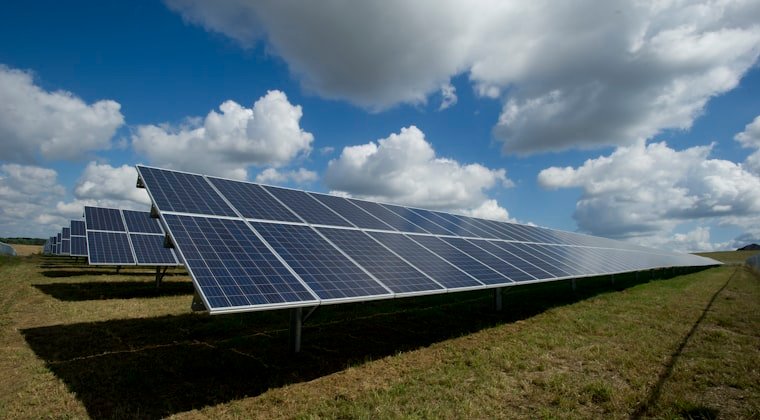
Uttar Pradesh is now the leading state in India for rooftop solar adoption. With 4.57 lakh cumulative installations, a record 3.47 lakh new systems added in FY2026, and a total installed capacity of 1,161 MW, the state has demonstrated that residential solar is not just viable here, it is mainstream.
For a homeowner anywhere in UP, whether in Lucknow, Kanpur, Varanasi, Meerut, Agra, Bareilly, or any of the state’s smaller cities, the combination of central government subsidy, an additional UP state subsidy, net metering income, and dramatically falling panel prices makes 2026 the most financially attractive year ever to go solar.
This guide covers everything you need to make an informed decision: costs by city, which DISCOM serves your area, the exact application process, the subsidy you qualify for, how net metering works, and what a realistic timeline looks like.
Why UP Leads India in Rooftop Solar
Three structural factors have driven UP to the top of the national rooftop solar rankings.
The dual subsidy advantage. Most Indian states only offer homeowners the central PM Surya Ghar subsidy. UP layers its own Rs 30,000 state subsidy on top. The total available subsidy in UP: Rs 78,000 central plus Rs 30,000 state for a 3 kW system, adds up to Rs 1,08,000, one of the highest combined subsidies available anywhere in India.
UPNEDA’s active implementation. The Uttar Pradesh New and Renewable Energy Development Agency has been among the most active state agencies in training vendors, coordinating DISCOM approvals, and managing the PM Surya Ghar rollout. The quality and size of UP’s registered vendor network reflects years of deliberate ecosystem building.
Electricity cost pressure. Tariffs across UP’s six DISCOMs have risen steadily over the past 3-4 years. A household consuming 400 units per month now pays Rs 3,000-4,500 depending on the DISCOM and billing slab. This economic pressure, combined with visible proof from neighbours who have already installed, is converting interest into installations at scale.
Understanding UP’s Six DISCOMs: Which One Serves You?
Uttar Pradesh electricity distribution is managed by six distinct companies. Your DISCOM determines who processes your solar application, how long feasibility approval takes, and which office you coordinate with for net meter installation.
| DISCOM | Coverage Area | Major Cities |
|---|---|---|
| LESA (Lucknow Electricity Supply Administration) | Lucknow city | Lucknow city proper |
| KESCO (Kanpur Electricity Supply Company) | Kanpur city | Kanpur city proper |
| MVVNL (Madhyanchal Vidyut Vitaran Nigam) | Central UP | Bareilly, Sitapur, Lakhimpur, Hardoi, Shahjahanpur |
| PVVNL (Pashchimanchal Vidyut Vitaran Nigam) | Western UP | Meerut, Ghaziabad, Saharanpur, Moradabad, Hapur, Bulandshahr |
| PuVVNL (Purvanchal Vidyut Vitaran Nigam) | Eastern UP | Varanasi, Gorakhpur, Prayagraj, Azamgarh, Jaunpur |
| DVVNL (Dakshinanchal Vidyut Vitaran Nigam) | Southern UP | Agra, Aligarh, Jhansi, Mathura, Firozabad |
Special cases: Noida and Greater Noida are partially served by NPCL (Noida Power Company Limited), a private DISCOM, in addition to PVVNL. Check your electricity bill header to identify your exact DISCOM.
What Rooftop Solar Costs in UP: City-Wise Breakdown
Costs vary by city due to differences in DISCOM charges, labour rates, and logistics. Here are current market rates for April 2026, post central and state subsidy:
| System Size | Lucknow | Kanpur | Varanasi | Meerut | Agra | Bareilly |
|---|---|---|---|---|---|---|
| 2 kW | Rs 70,000-95,000 | Rs 80,000-1,00,000 | Rs 80,000-1,00,000 | Rs 80,000-1,00,000 | Rs 75,000-1,00,000 | Rs 75,000-95,000 |
| 3 kW | Rs 1,02,000-1,10,000 | Rs 1,07,000-1,15,000 | Rs 1,05,000-1,15,000 | Rs 1,05,000-1,15,000 | Rs 1,05,000-1,15,000 | Rs 1,02,000-1,12,000 |
| 5 kW | Rs 2,00,000-2,40,000 | Rs 2,10,000-2,50,000 | Rs 2,05,000-2,45,000 | Rs 2,05,000-2,45,000 | Rs 2,05,000-2,45,000 | Rs 2,00,000-2,40,000 |
These figures account for the maximum combined subsidy of Rs 1,08,000 for a 3 kW system. Systems above 3 kW receive the same maximum subsidy: the additional capacity comes at full cost.
The Subsidy You Qualify For
Central PM Surya Ghar subsidy (from Ministry of New and Renewable Energy):
- 1 kW system: Rs 30,000
- 2 kW system: Rs 60,000
- 3 kW and above: Rs 78,000 (maximum)
UP state subsidy (from UPNEDA):
- Up to Rs 30,000 for residential rooftop installations
Total maximum subsidy in UP: Rs 1,08,000 for a 3 kW or larger system.
Both subsidies are disbursed after installation is complete, inspected, and the net meter is installed. The subsidy amount is transferred directly to the bank account you register during the application.
Eligibility conditions:
- You must be a residential consumer (commercial and industrial applications have different subsidy rules)
- The electricity connection must be in your name
- You must not have received a solar rooftop subsidy for the same property previously
- The property must have adequate shadow-free roof space
- You must use a UPNEDA and MNRE-registered vendor
The Step-by-Step Application Process in UP
The process is primarily digital, managed through pmsuryaghar.gov.in.
Step 1: Register on the national portal
Visit pmsuryaghar.gov.in. Register using your state (Uttar Pradesh), your DISCOM, your 12-digit consumer number (from your electricity bill), your mobile number, and your email address.
Step 2: Submit the rooftop solar application
Log in with your consumer number and mobile number. Fill out the application form with your desired system capacity and bank account details for subsidy disbursement.
Step 3: DISCOM feasibility approval
Your application is forwarded to your local DISCOM. They verify that the local transformer has sufficient capacity for your additional solar load. Timeline: 15-30 days for most UP cities, faster in Lucknow and Kanpur due to high-volume processing experience.
Step 4: Select your vendor
Choose a vendor from the approved list on the PM Surya Ghar portal or UPNEDA portal (upnedasolarrooftopportal.com). Verify their UPNEDA registration number. Compare at least 2-3 quotes for your system size.
Step 5: Sign vendor agreement and installation
The vendor conducts a site survey, finalises the system design, and proceeds with installation after your signed agreement. Physical installation of a 3 kW system takes 2-3 days.
Step 6: Commissioning report and net meter application
After installation, the vendor provides a commissioning report. This is uploaded to the PM Surya Ghar portal. The DISCOM then schedules a joint inspection and net meter installation.
Step 7: DISCOM inspection and net meter installation
Your DISCOM inspector verifies the installation and installs the bi-directional net meter. Timeline: 7-15 days in major cities, 15-30 days in smaller towns.
Step 8: Subsidy disbursement
Within 30 days of net meter installation confirmation on the portal, both central and state subsidies are transferred to your registered bank account.
Total realistic timeline: 8-12 weeks in major UP cities. 12-16 weeks in smaller towns.
How Net Metering Works in UP
Net metering allows you to export surplus solar electricity to the grid and receive credits on your bill. All six UP DISCOMs support net metering for residential systems up to 500 kW under UPERC (Uttar Pradesh Electricity Regulatory Commission) regulations.
How billing works:
- During the day, your solar panels power your home first.
- Any surplus generation flows to the DISCOM grid and is recorded by your bi-directional meter as “exported units.”
- At night, you consume from the grid as normal, recorded as “imported units.”
- Your monthly bill charges you for net consumption: imported units minus exported units.
- If you export more than you import in a month, the surplus carries forward as a credit.
- At the end of the financial year (March), any remaining credit is settled at the APPC (Average Pooled Power Purchase Cost) rate, approximately Rs 3-4 per unit: paid to you in cash or credited against your next bill.
The self-consumption principle: Since the APPC settlement rate (Rs 3-4/unit) is lower than what you pay for grid electricity (Rs 6-9/unit in UP depending on slab), you get the best financial return by maximising daytime self-consumption. Run washing machines, water heaters, air conditioners, and other heavy appliances during solar generation hours (9 AM to 4 PM) rather than at night.
Documents Required
- Electricity bill showing consumer number, DISCOM name, and registered address
- Aadhaar card
- PAN card
- Property ownership proof (registered sale deed, property tax receipt, or mutation certificate)
- Bank passbook or cancelled cheque (account must be in applicant’s name)
- Passport-size photographs (2)
- Rooftop photographs showing shadow-free area (your vendor helps prepare these)
Choosing a UPNEDA-Registered Vendor: What to Look For
With hundreds of registered vendors operating across UP, selecting the right one requires more than just comparing quoted prices.
Verify UPNEDA registration: Go to upnedasolarrooftopportal.com and search for the vendor by name and district. A vendor not on this list cannot get you subsidy.
| Check panel and inverter brands | Ask specifically which brand of panels and inverter is included in the quote. Tier-1 panel brands for the Indian market include Waaree, Vikram Solar, Adani Solar, Tata Power Solar, and REC. Established inverter brands include Havells, Delta, SMA, Solis, and Growatt. |
| Ask for references | Request contact details of 3-5 recent installations in your city. Call them and ask about installation quality, after-service responsiveness, and whether the subsidy was processed correctly. |
| Get written clarity on warranties | Your quote should specify: panel performance warranty duration, inverter warranty duration, structural warranty for mounting, and the vendor’s own workmanship warranty. |
| Understand the payment structure | Reputable vendors typically ask for 30-40% upfront, 50-60% on installation, and 10% on subsidy disbursement. Be cautious of vendors demanding 80-100% upfront. |
Common Mistakes UP Homeowners Make with Solar
Choosing the cheapest quote without checking vendor credentials. An unregistered vendor offering Rs 15,000-20,000 less will cost you the entire Rs 1,08,000 subsidy you are entitled to. The subsidy exceeds the price difference every time.
Installing too large a system. A household paying Rs 2,000-2,500 per month does not need a 5 kW system. Oversizing your system wastes money on capacity you cannot use and increases your subsidy eligibility gap.
Ignoring shading analysis. Even one tree branch casting intermittent shadow on a panel can reduce your entire string’s output by 15-30%. A proper site survey with a shading analysis tool is non-negotiable.
Not understanding the net meter timeline. Some homeowners are surprised when their system is installed and running but they are not yet exporting to the grid officially. The net meter must be installed by DISCOM before your solar billing begins. Factor this 7-30 day period into expectations.