
Net Metering in UP: How All 6 DISCOMs Handle Your Solar Export
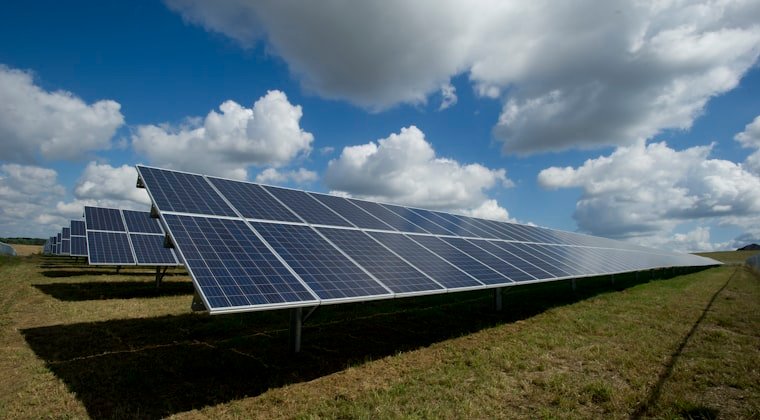
Net metering is the mechanism that makes residential solar financially compelling. Without it, all the electricity your panels generate but do not immediately consume would be wasted. With it, surplus generation flows to the grid, earns you credits, and reduces your monthly electricity bill.
In Uttar Pradesh, net metering is governed by UPERC, the Uttar Pradesh Electricity Regulatory Commission, and is mandatory for all six UP DISCOMs. But how each DISCOM actually implements net metering, processing timelines, billing cycles, and practical steps, differs meaningfully. This guide explains both the rules and the practical realities for each DISCOM.
What Net Metering Is and How It Works in UP
When your solar panels generate more electricity than your home consumes at that moment, the surplus flows back to your DISCOM’s grid through a bi-directional (net) meter. The meter records:
- Import: Units you consume from the grid (mainly at night, cloudy days, or when consumption exceeds generation)
- Export: Units your panels send to the grid (mainly during sunny daytime hours when generation exceeds consumption)
At the end of each billing cycle, you are charged for net units: Import minus Export. If imports exceed exports, you pay for the difference at your regular tariff. If exports exceed imports in a given month, the surplus credit carries forward to the next month.
At the end of the financial year (March 31), any remaining credit balance is settled by the DISCOM at the APPC rate, the Average Pooled Power Purchase Cost, which is approximately Rs 3-4 per unit for UP’s DISCOMs. This is significantly lower than your retail tariff of Rs 6-9 per unit, which is why financial planning around maximising daytime self-consumption always beats maximising grid export.
Net Metering Rules in UP Under UPERC Regulations
Key regulatory parameters set by UPERC that apply to all six UP DISCOMs:
| Parameter | UP Rule |
|---|---|
| Maximum system size for net metering | Up to 500 kW for residential (residential consumers typically limited to connection load) |
| Maximum system size relative to sanctioned load | System capacity must not exceed your sanctioned connection load in kW |
| Billing cycle | Monthly |
| Annual surplus settlement rate | APPC rate (approximately Rs 3-4/unit, varies by DISCOM) |
| Net meter type | Bi-directional smart meter (installed by DISCOM at their cost) |
| Connection categories eligible | Residential (LMV-1), small commercial (LMV-2), others with separate rules |
DISCOM-Wise Net Metering: Practical Realities
LESA: Lucknow Electricity Supply Administration
| Coverage | Lucknow city |
| Feasibility-to-net-meter timeline | Fastest in UP: approximately 22-40 days from commissioning report submission to net meter installation |
| Billing | Monthly, with annual true-up in April |
| APPC rate | Approximately Rs 3-3.5 per unit |
| LESA’s advantage | The highest installation volume in UP has forced LESA to develop efficient solar processing workflows. Lucknow homeowners get the fastest net metering experience in the state. |
| Practical tip for LESA consumers | After commissioning report submission, track LESA’s scheduled inspection date through the PM Surya Ghar portal. If the inspection is delayed beyond 15 days, follow up with the LESA solar cell at their divisional office. |
KESCO: Kanpur Electricity Supply Company
| Coverage | Kanpur city |
| Feasibility-to-net-meter timeline | 30-55 days from commissioning report to net meter |
| Billing | Monthly, annual true-up |
| APPC rate | Approximately Rs 3.2-3.8 per unit |
| Key note | KESCO processes solar applications through its commercial circle office in Kanpur. Your vendor should submit the commissioning report to the correct circle office for your area within Kanpur city. |
PVVNL: Pashchimanchal Vidyut Vitaran Nigam
| Coverage | Meerut, Ghaziabad, Saharanpur, Moradabad, Hapur, Bulandshahr, and western UP |
| Feasibility-to-net-meter timeline | 25-45 days in Meerut and Ghaziabad; longer in smaller towns |
| Billing | Monthly, annual true-up |
| APPC rate | Approximately Rs 3.2-3.8 per unit |
| Key note | PVVNL covers a geographically large zone. Processing efficiency is higher in Meerut and Ghaziabad due to higher volume. Saharanpur and Moradabad consumers may see longer timelines. |
MVVNL: Madhyanchal Vidyut Vitaran Nigam
| Coverage | Bareilly, Sitapur, Lakhimpur Kheri, Hardoi, Shahjahanpur, and central UP |
| Feasibility-to-net-meter timeline | 40-65 days: one of the slower DISCOMs for solar processing |
| Billing | Monthly, annual true-up |
| APPC rate | Approximately Rs 3.2-3.6 per unit |
| Key note | MVVNL’s large rural coverage area means its solar processing capacity is less developed in smaller towns. Bareilly city is better served than rural MVVNL areas. Follow up persistently after commissioning report submission. |
PuVVNL: Purvanchal Vidyut Vitaran Nigam
| Coverage | Varanasi, Gorakhpur, Prayagraj, Azamgarh, Jaunpur, Chandauli, and eastern UP |
| Feasibility-to-net-meter timeline | 35-60 days in major cities; longer in rural areas |
| Billing | Monthly, annual true-up |
| APPC rate | Approximately Rs 3-3.5 per unit |
| Key note | PuVVNL covers UP’s large eastern region with significant rural load. Varanasi and Prayagraj are better served than smaller PuVVNL towns. The PuVVNL headquarter in Varanasi provides somewhat more responsive processing for Varanasi city applications. |
DVVNL: Dakshinanchal Vidyut Vitaran Nigam
| Coverage | Agra, Aligarh, Jhansi, Mathura, Firozabad, Hathras, and southern UP |
| Feasibility-to-net-meter timeline | 35-55 days in major cities |
| Billing | Monthly, annual true-up |
| APPC rate | Approximately Rs 3.2-3.8 per unit |
| Key note | DVVNL covers significant industrial and rural load in southern UP. Agra city has seen higher solar adoption and correspondingly better DVVNL solar processing capacity. Jhansi and rural DVVNL areas have longer timelines. |
How Net Metering Billing Actually Works: A Worked Example
Let us trace a complete billing year for a 3 kW system in Lucknow under LESA.
System: 3 kW, annual generation approximately 4,600 units
Household monthly consumption: 380 units
| Month | Solar Generation | Home Consumption | Net Export (+) / Import (-) | Bill Status |
|---|---|---|---|---|
| April | 420 | 350 | +70 (surplus) | Credit: 70 units |
| May | 440 | 430 | +10 | Credit: 80 units |
| June | 400 | 500 | -100 (import) | Net: -20 units, pay Rs 140 |
| July | 240 | 350 | -110 | Net: -130 units, pay Rs 910 |
| August | 220 | 300 | -80 | Net: -210 units, pay Rs 560 |
| September | 400 | 330 | +70 | Credit: -140 units (pay Rs 980 and credit 70) |
| October | 420 | 300 | +120 | Credit: 190 units |
| November | 350 | 280 | +70 | Credit: 260 units |
| December | 290 | 340 | -50 | Net: 210 units |
| January | 280 | 360 | -80 | Net: 130 units |
| February | 320 | 340 | -20 | Net: 110 units |
| March | 380 | 330 | +50 | Year-end credit: 160 units |
Year-end settlement: 160 units remaining credit settled at Rs 3.5/unit = Rs 560 paid to homeowner by LESA.
Annual net savings: Sum of reduced bills across the year plus year-end settlement. In this example, approximately Rs 28,000-32,000 annual saving depending on exact tariff slabs.
Self-Consumption Optimisation: Getting the Most From Net Metering
Since exported units are worth Rs 3-4 at APPC settlement versus Rs 6-9 if consumed directly, maximising daytime self-consumption always beats maximising export. Practical steps for UP homeowners:
| Shift heavy appliances to daytime hours (9 AM to 3 PM) | Washing machine, water heater, dishwasher, air conditioner, and water pump should run during solar generation hours whenever possible. |
| Charge batteries and EVs during peak solar hours | If you have a home battery or EV charger, schedule charging from approximately 10 AM to 2 PM. |
| Programme inverter for self-consumption priority mode | Most quality inverters allow setting self-consumption priority. Verify your vendor has configured this correctly during installation. |
| Monitor your generation vs consumption | A monitoring app linked to your inverter (most Tier-1 brands include this) lets you see real-time generation and adjust your usage patterns accordingly. |