
Solar for Housing Societies in UP: Subsidy, Rules and Application
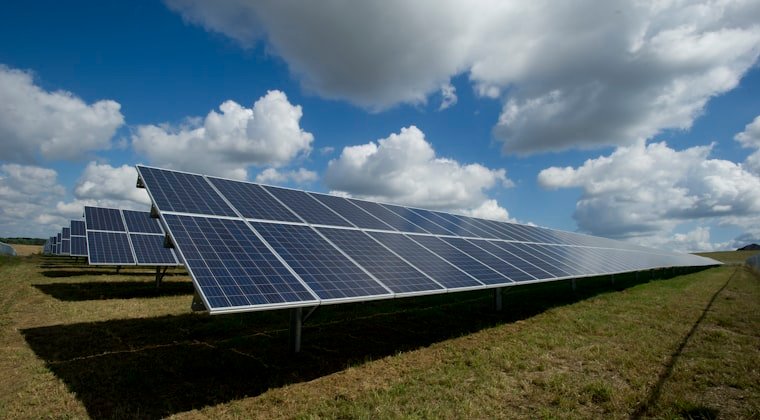
Rooftop solar is not just for independent houses. Apartment complexes, housing societies, and gated communities in UP can install solar for common area electricity (lifts, corridor lighting, water pumps, security systems) and dramatically reduce their maintenance bills. Individual flat owners can also install solar for their own units if they have rooftop access rights.
The rules are different from independent house solar, and the subsidy structure is distinct. This guide covers everything a housing society or flat owner in UP needs to understand about going solar in 2026.
Two Different Solar Models for Housing Societies
Model 1: Common Area Solar
The RWA installs centrally.
The Resident Welfare Association installs a solar system on the building rooftop to power common area loads: lifts, lobby lighting, corridor lights, water pumps, CCTV, and building management systems. The solar electricity reduces the society’s common area electricity bill, which typically appears as a maintenance cost charged to all residents.
Model 2: Individual Flat Owner Solar
Each flat owner installs solar panels on their dedicated roof space or terrace for their individual electricity connection. This works well in low-rise or independent floor buildings where each flat has exclusive access to a portion of the rooftop.
Model 3: Combination Approach
Some housing societies install a larger system that serves both common areas and provides credits to individual flat owners through sub-metering or billing offset arrangements.
Subsidy for Housing Society Common Area Solar
The PM Surya Ghar subsidy structure for residential group housing societies differs from individual residential:
| System Capacity | Subsidy Rate |
|---|---|
| Individual flat (up to 3 kW) | Rs 78,000 central + Rs 30,000 UP state = Rs 1,08,000 max |
| Group housing common area | Rs 18,000 per kW up to 500 kW |
For a 50 kW common area system in a large housing society: 50 kW × Rs 18,000 = Rs 9,00,000 in central subsidy. This is a substantial benefit for large apartment complexes with significant common area power loads.
The UP state government’s additional subsidy applicability for group housing common area installations should be confirmed directly with UPNEDA at the time of application, as the rules have specific conditions.
How a Typical UP Housing Society Benefits
Common area electricity for a mid-size complex:
A typical UP housing society with 100 flats across 4-6 floors has common area electricity consumption of approximately 3,000-8,000 units per month depending on lifts, water pumps, lighting, and security systems. This bill, paid from maintenance collections, runs Rs 20,000-60,000 monthly.
A 30-50 kW solar system on the rooftop covers a significant portion of this load. After subsidy:
- 30 kW system: Subsidy of Rs 5,40,000. Pre-subsidy cost approximately Rs 18-22 lakh. Post-subsidy cost: Rs 12.6-16.6 lakh.
- Monthly saving: Approximately Rs 15,000-20,000 on common area electricity bill.
- Payback: Approximately 5-7 years.
The saving flows directly to reduced maintenance charges for all residents: a tangible, recurring benefit that resonates strongly in housing society committee decisions.
RWA Application Process for Common Area Solar in UP
The RWA applies as the entity for the solar installation. Here is the process:
Step 1: The RWA passes a resolution authorising solar installation and designates a representative (typically the society secretary or president) to handle the application.
Step 2: Apply on pmsuryaghar.gov.in under the “Group Housing Society” or “RWA” category, using the society’s electricity connection number for common area supply.
| Step 3 | DISCOM feasibility approval for the common area connection. Since common area supply is often a three-phase commercial or LMV-2 connection, the feasibility process may involve a more detailed transformer assessment than residential applications. |
| Step 4 | Select a UPNEDA-registered vendor experienced with larger rooftop installations (10 kW and above). Get minimum 3 quotes. |
| Step 5 | Society committee approves vendor and contract. Installation typically takes 5-10 days for larger systems. |
| Step 6 | Commissioning report submitted. DISCOM inspection and three-phase net meter installation. |
| Step 7 | Subsidy disbursement to the society’s bank account. |
Individual Flat Owner Solar in a Housing Society
If you own a flat and want solar for your own electricity connection:
Requirement 1: Separate electricity connection. You need a residential DISCOM connection for your flat specifically, not just the society’s common area connection.
Requirement 2: Exclusive rooftop access rights. You need clear rights to a portion of the rooftop for your solar panels. This is typically documented in your sale deed or through a society resolution.
Requirement 3: Structural clearance. The building’s structural integrity for supporting solar panels must be assessed. Request the original structural drawings or get a fresh structural engineer’s certificate.
Requirement 4: Society NOC. Most housing societies require a No Objection Certificate from the RWA before individual flat owners install rooftop equipment. Get this in writing before proceeding.
With these in place, individual flat owners apply exactly as independent homeowners: through pmsuryaghar.gov.in under their individual connection number, and qualify for the full individual residential subsidy of Rs 1,08,000 for a 3 kW system.
Common Challenges in Society Solar Installations
| Rooftop space allocation | When multiple flat owners want individual solar systems and common area solar is also planned, allocating the rooftop becomes complex. The society should adopt a formal rooftop allocation policy before applications begin. |
| Ageing building structures | Housing societies built in the 1980s and 1990s in cities like Lucknow, Kanpur, and Agra often have rooftops that need structural reinforcement before solar mounting. This adds Rs 50,000-1,50,000 to the project cost for large systems. |
| Three-phase net meter coordination | Common area connections typically operate on three-phase supply. Three-phase net meters and the associated DISCOM coordination requirements are more complex than residential single-phase installations. Choose a vendor with specific experience in three-phase solar for housing societies. |
| Maintenance responsibility clarity | The RWA must have a clear written policy on who is responsible for maintaining the solar system, how savings are distributed, and what happens when individual flat owners sell their flats. |
Example: 40-Flat Society in Lucknow
| Society profile | 40 flats, 5 floors, Gomti Nagar, Lucknow. Common area consumption: 4,500 units/month. Current monthly common area LESA bill: Rs 32,000-38,000. |
| Recommended system | 25 kW on building rooftop |
| Pre-subsidy cost | Approximately Rs 14-16 lakh |
| PM Surya Ghar subsidy | 25 kW × Rs 18,000 = Rs 4,50,000 |
| Post-subsidy cost | Approximately Rs 9.5-11.5 lakh |
| Monthly common area saving | Rs 14,000-18,000 (covering approximately 3,000 units of the 4,500 monthly load) |
| Payback period | Approximately 5.5-6.5 years |
| Per-flat reduction in annual maintenance | Rs 4,200-5,400 |