
Rooftop Solar in Kanpur 2026: KESCO Guide, Cost & Subsidy
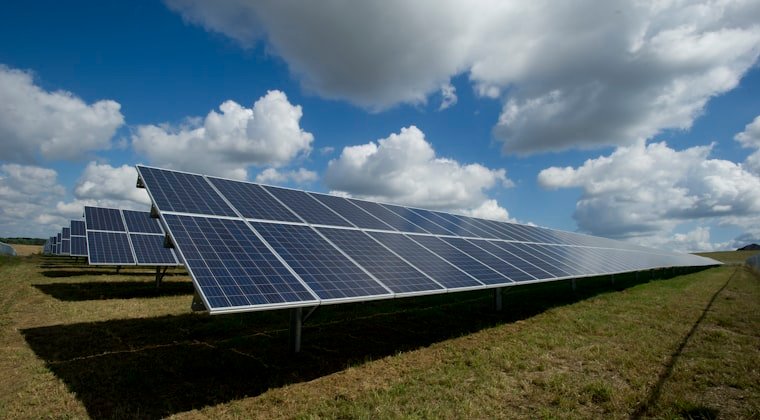
Kanpur is UP’s second-largest city and its second-largest solar market. With 3,316 new rooftop solar systems installed in March 2026 alone, the city is accelerating rapidly, and the economics that are driving this growth are not complicated. Kanpur homeowners are paying among the highest residential electricity bills in UP, and solar eliminates 70-90% of that burden within 3-4 years.
This guide covers everything specific to going solar in Kanpur: your DISCOM is KESCO, here is how their application process works, here is what the system actually costs after UP’s Rs 1,08,000 combined subsidy, and here is what a typical Kanpur household realistically saves.
Your DISCOM Is KESCO: What That Means for Your Application
KESCO, Kanpur Electricity Supply Company, is the distribution company serving Kanpur city. Unlike PVVNL, MVVNL, and other zone-level DISCOMs that cover large geographic areas, KESCO operates exclusively in Kanpur city, which gives it a focused service area and reasonable familiarity with solar applications.
KESCO has been processing PM Surya Ghar applications since the scheme launched and has built some administrative capacity for handling rooftop solar. That said, Kanpur’s processing timelines are slightly longer than Lucknow’s LESA, expect 20-35 days for feasibility approval versus 15-25 days in Lucknow.
If your electricity bill header shows KESCO and your consumer number format, you are in the right jurisdiction. Applicants in Kanpur Dehat (rural Kanpur district) fall under DVVNL rather than KESCO, check your bill carefully.
What Rooftop Solar Costs in Kanpur Right Now
Here are current market rates for April 2026, accounting for the full Rs 1,08,000 UP subsidy (Rs 78,000 central + Rs 30,000 state) for a 3 kW system:
| System Size | Before Subsidy | Subsidy Applied | Your Net Cost | Monthly Generation |
|---|---|---|---|---|
| 2 kW | Rs 1,40,000-1,65,000 | Rs 90,000 | Rs 50,000-75,000 | 220-240 units |
| 3 kW | Rs 1,85,000-2,15,000 | Rs 1,08,000 | Rs 77,000-1,07,000 | 340-380 units |
| 5 kW | Rs 2,90,000-3,30,000 | Rs 1,08,000 | Rs 1,82,000-2,22,000 | 570-620 units |
| 10 kW | Rs 5,20,000-5,80,000 | Rs 1,08,000 | Rs 4,12,000-4,72,000 | 1,140-1,240 units |
Costs in Kanpur run approximately Rs 5,000-10,000 higher than Lucknow for the same system size, reflecting KESCO’s higher connection-related charges and slightly elevated labour costs in parts of the city. The subsidy amount is identical, UP’s Rs 1,08,000 applies city-wide.
Electricity Tariffs in Kanpur: Why Solar Makes Particularly Strong Sense Here
Kanpur is an industrial city with significant commercial and industrial load, which has historically driven KESCO tariffs on the higher end of UP’s residential range. Understanding your slab rate matters for calculating solar savings.
Approximate KESCO residential tariff structure (confirm current rates at kesco.co.in):
| Monthly Units Consumed | Approximate Rate |
|---|---|
| 0-100 units | Rs 3-4 per unit |
| 101-300 units | Rs 5-6 per unit |
| 301-500 units | Rs 6.5-7.5 per unit |
| Above 500 units | Rs 7.5-9 per unit |
For a household consuming 350 units per month, most consumption falls in the Rs 6.5-7.5/unit slab. Solar generation eliminates these units from your bill, generating savings at the higher end of the tariff range.
A 3 kW system generating 360 units per month in Kanpur saves approximately Rs 2,700-3,200 per month depending on which slabs your consumption falls in. At Rs 3,000 monthly savings and a net system cost of Rs 95,000, your payback period is approximately 31-32 months, under 3 years.
KESCO Application Process: Step by Step
Step 1: Register at pmsuryaghar.gov.in
Select Uttar Pradesh as your state and KESCO as your DISCOM. Enter your 12-digit consumer number exactly as printed on your electricity bill. You will receive an OTP on your registered mobile for verification.
Step 2: Submit application
Log in and fill the rooftop solar application with the system size you want and your bank details. Your application is routed to KESCO automatically.
Step 3: KESCO feasibility approval
KESCO reviews whether your local transformer can support your solar export load. This typically takes 20-35 days. You will receive an approval notice via SMS and on the portal.
Step 4: Choose a UPNEDA-registered vendor in Kanpur
The PM Surya Ghar portal and UPNEDA portal (upnedasolarrooftopportal.com) list approved vendors by district. Search for Kanpur Nagar KESCO to find vendors specifically registered for your area. Get at least 3 quotations before deciding.
Step 5: Installation
Once you select a vendor and sign the agreement, the site survey and installation typically take 1-2 weeks including procurement.
Step 6: Submit commissioning report
Your vendor prepares the commissioning certificate and uploads it to the portal. KESCO then schedules the joint inspection.
Step 7: KESCO inspection and net meter
KESCO inspects the installation and installs the bi-directional net meter. Allow 10-20 days after commissioning report submission.
Step 8: Subsidy credit
Central and state subsidies are credited to your registered bank account within 30 days of commissioning confirmation. Total timeline in Kanpur: approximately 10-13 weeks.
Real Savings for a Kanpur Household: Three Scenarios
Scenario A: Double-income household, 3BHK, Kidwai Nagar
Monthly KESCO bill: Rs 4,200 (approximately 480 units)
Recommended system: 4 kW
Annual saving after solar: Rs 40,000-48,000
Net system cost after subsidy: Rs 1,35,000-1,55,000
Payback: approximately 3-4 years
Scenario B: Retired couple, 2BHK, Civil Lines
Monthly KESCO bill: Rs 2,200 (approximately 260 units)
Recommended system: 2 kW
Annual saving after solar: Rs 22,000-26,000
Net system cost after subsidy: Rs 55,000-75,000
Payback: approximately 3 years
Scenario C: Joint family, 4BHK, Rawatpur
Monthly KESCO bill: Rs 6,500 (approximately 700 units)
Recommended system: 5 kW
Annual saving after solar: Rs 55,000-65,000
Net system cost after subsidy: Rs 1,80,000-2,20,000
Payback: approximately 3.5-4 years
All three scenarios demonstrate payback under 4 years and 20+ years of savings thereafter.
Kanpur-Specific Considerations
| Industrial area proximity | If your home is in an area with significant industrial load on the local transformer (parts of Panki, Gwaltoli, and industrial corridors), your KESCO feasibility approval might require additional transformer assessment. This can add 1-2 weeks to your timeline. Your vendor should flag this during the site survey. |
| Older buildings | Parts of central Kanpur have older RCC rooftops that may require structural assessment before heavy mounting equipment is installed. Your vendor should inspect roof load-bearing capacity as part of the site survey. |
| Summer heat impact | Kanpur experiences extreme summer heat (45-48 degrees Celsius in May-June). Panel efficiency drops approximately 0.4-0.5% per degree above 25 degrees. However, the longer daylight hours and stronger solar radiation in Kanpur’s summer months mean April-June is still your highest-generation quarter despite the heat. |
| Power cut frequency | Parts of Kanpur: particularly older grid areas, experience more frequent power cuts than Lucknow. If your area has cuts of 3+ hours daily, evaluate whether a hybrid system with battery backup makes sense. See our hybrid solar guide for UP for details. |
Choosing a Solar Vendor in Kanpur
Kanpur now has a mature vendor ecosystem with dozens of UPNEDA-registered companies. When comparing quotes:
Ask specifically whether the inverter is a branded model (Havells, Solis, Delta, Growatt) or an unbranded unit. Unbranded inverters are cheaper but significantly less reliable over a 10-year horizon.
Confirm panel brand and efficiency rating. In Kanpur’s heat conditions, N-type monocrystalline panels with lower temperature coefficients perform better than standard P-type panels. Ask your vendor about the temperature coefficient specification.
Request the DISCOM charge breakdown in your quote, KESCO levies certain connection and metering charges that vary by system size and consumer category. These should be transparently itemised.